

Old houses remember things in strange ways.
Sometimes in their walls, sometimes in a piece of furniture that nobody ever thought to throw away — and sometimes in a drawer.
There was an old buffet in the house when my mother and I first came here in 1978. I was five years old.
It stood in what is now House 4, approximately where the dining table stands today. Its upper cabinet was made with the beautiful, slightly imperfect handmade glass of its time, and inside one of its drawers were letters.
They had been written years earlier by my grandmother’s brothers and sisters to their parents, my great-grandmother Nikoleti and my great-grandfather Zorzi.
Nobody had collected them for posterity or carefully created a family archive. They were simply there — in the drawer where someone had put them after reading them.
And that is where they stayed.
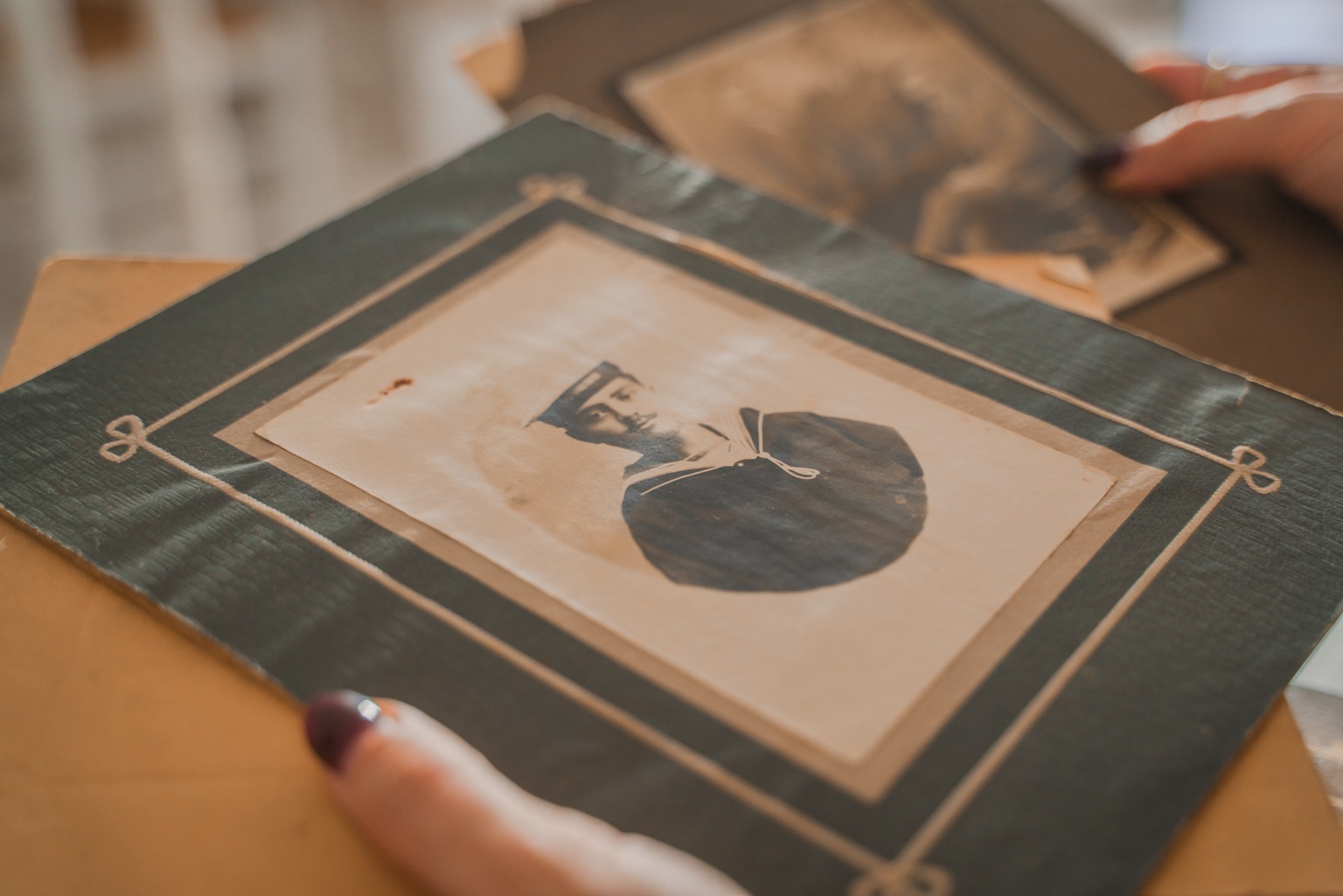
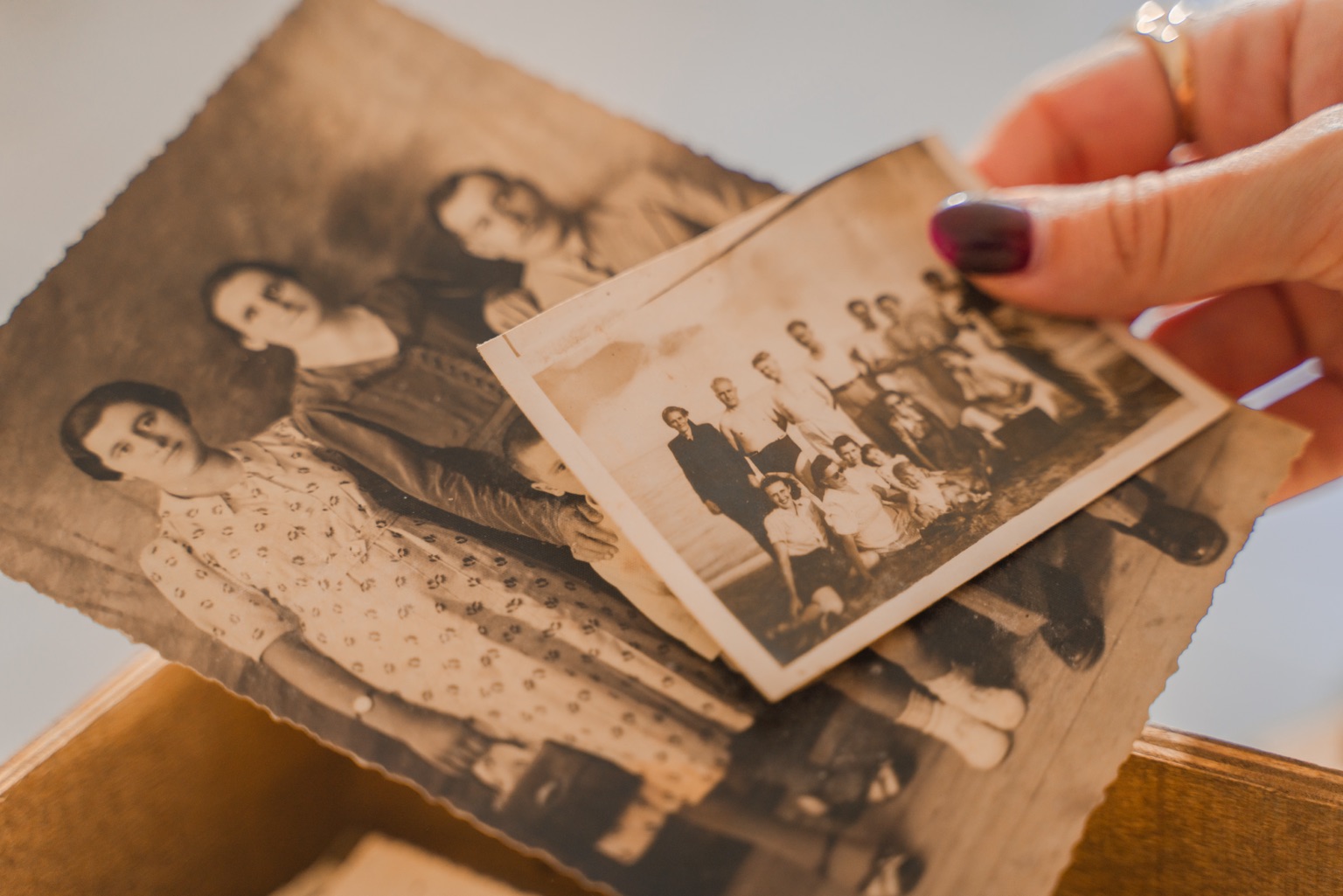
The buffet remained in the house until 2014, when my parents stopped using the house themselves. I took it back to Athens with me, partly because of that fragile old glass and partly because it was one of the things I simply couldn’t imagine leaving behind.
The letters came too.
Today, nearly half a century after my mother and I first found them, they are still in exactly the same drawer.
The buffet has changed houses, changed cities and changed purpose — the letters have never changed drawers.
Perhaps that is why I still think of them as belonging to the house, even though they are no longer physically here.
They come from a time when what we now call Houses 3 and 4 were not two houses at all. They were one family home, where my grandmother grew up with her brothers and sisters and their parents, Nikoleti and Zorzi.
Nine children grew up in that house. There had been two more, both lost when they were only six or seven years old.
Several of the spaces along this little part of the caldera belonged to different generations of the same large family.
Today, that sentence might suggest something rather grand.
It wasn’t.
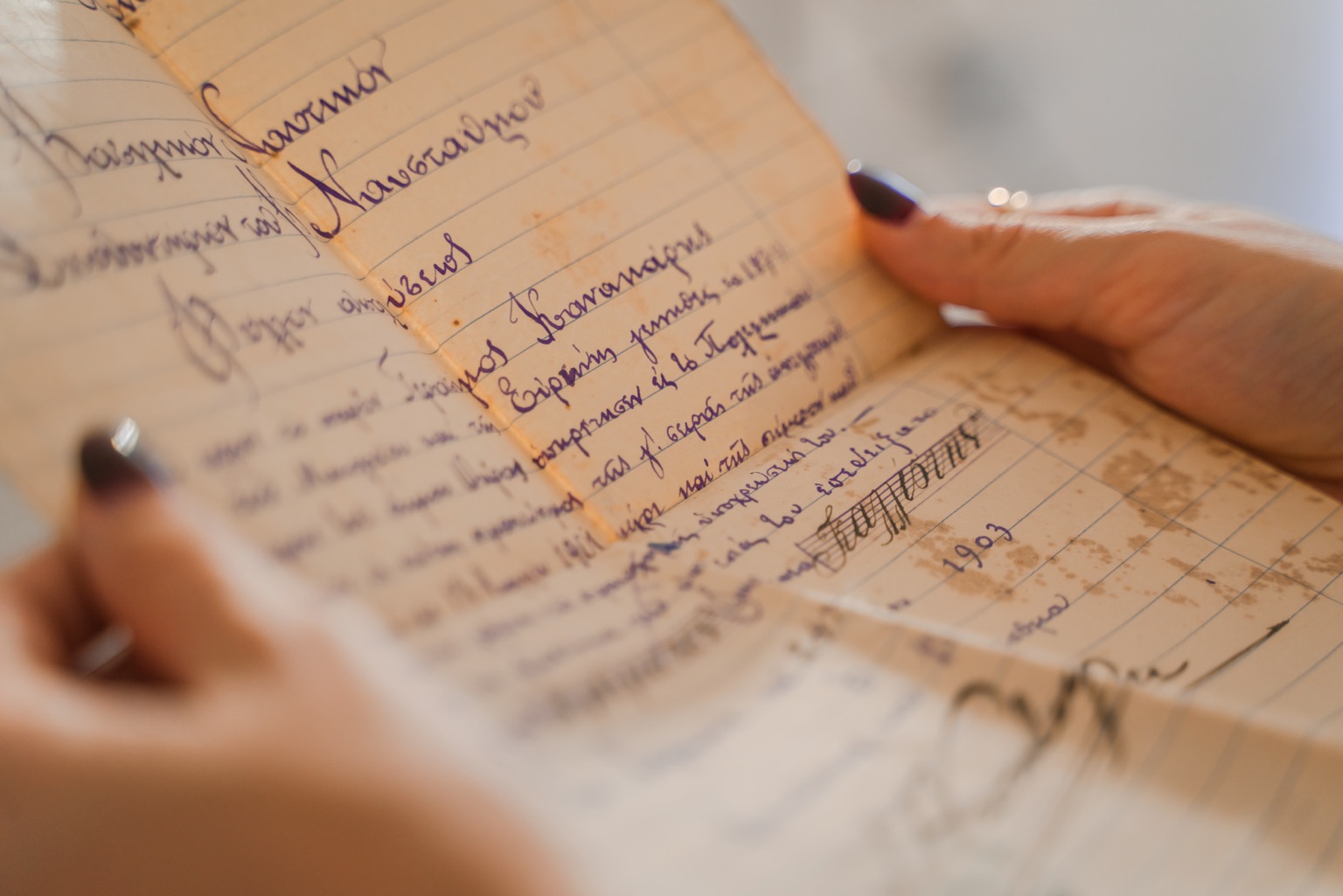
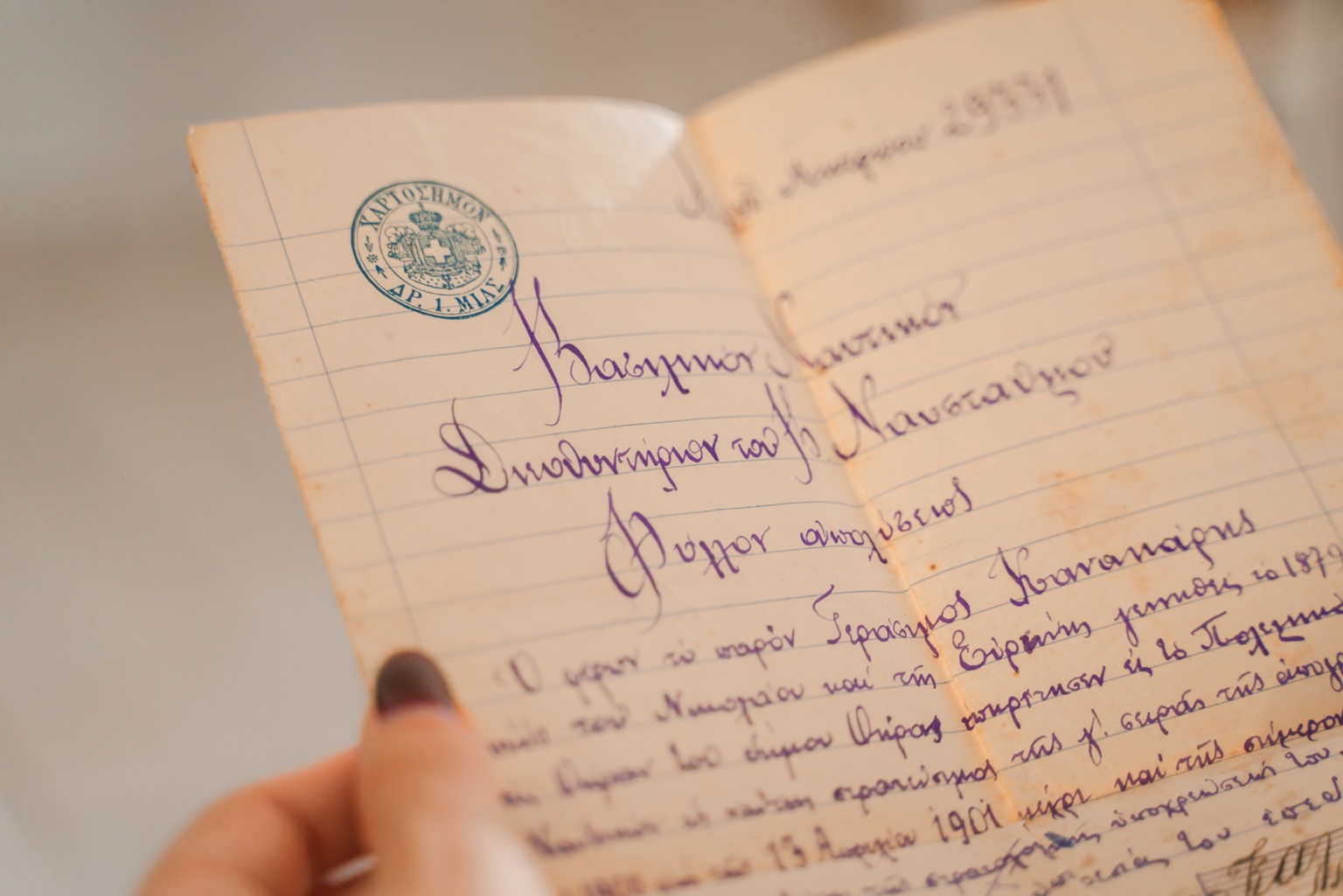
Having several spaces did not mean that a family was wealthy, and a house on the caldera certainly did not carry anything like the value or prestige it does today. This part of the village was a very different place then — far from prestigious, much more practical and worlds apart from the Santorini people know today.
The spaces simply had uses.
Immediately to the left of us was a space for the animals — goats, chickens and a donkey. It is in ruins today. On the other side was the house where my great-great-grandmother lived, and further along was a space used for washing clothes.
People, animals, work, washing, cooking and sleeping — different parts of everyday life spread across a collection of spaces belonging to one large family.
Nobody was thinking about square metres or property values, and certainly nobody was thinking about the commercial advantages of a caldera view.
They were simply living there.
Eventually, the children grew up and life carried them elsewhere.
Several of my grandmother’s brothers became sailors. Others in the family moved to Athens. The family that had once lived together began to spread out — and from those lives away from home came the letters that remained in the buffet.
Some were written by people I knew. Others came from relatives I never met and know only through the stories I was told about them.
What I love about the letters is how ordinary they are.
The sailors wrote home from places that must have seemed almost mythical to parents who had hardly ever left their own village. They sent money when it was needed and gifts when they could. Sometimes a letter accompanied a little luxury — something good to eat, a bottle of ouzo, a delicacy from somewhere far away — along with cheerful thoughts about how their parents might enjoy it and, naturally, share it with neighbours and friends.
There were photographs of new babies and news of unfamiliar places, family concerns, practical matters and small pieces of everyday life.
And the daughters, living away from the family home in Athens, occasionally complained about one another.
Some things, apparently, have never required modern technology.
But there is one thing in those letters that has always stayed with me — their sense of time.
I remember one of them saying that by the time the letter reached Santorini, it would already be Easter. I need to find that particular letter again before I can remember the exact words, but I have never forgotten the thought behind them.
Today, I can send a photograph from the other side of the world and someone in Santorini can see it seconds later. We can hear a voice immediately, see a new baby almost as soon as it is born — and, should the need arise, complain to our siblings in real time.
Their world moved differently.
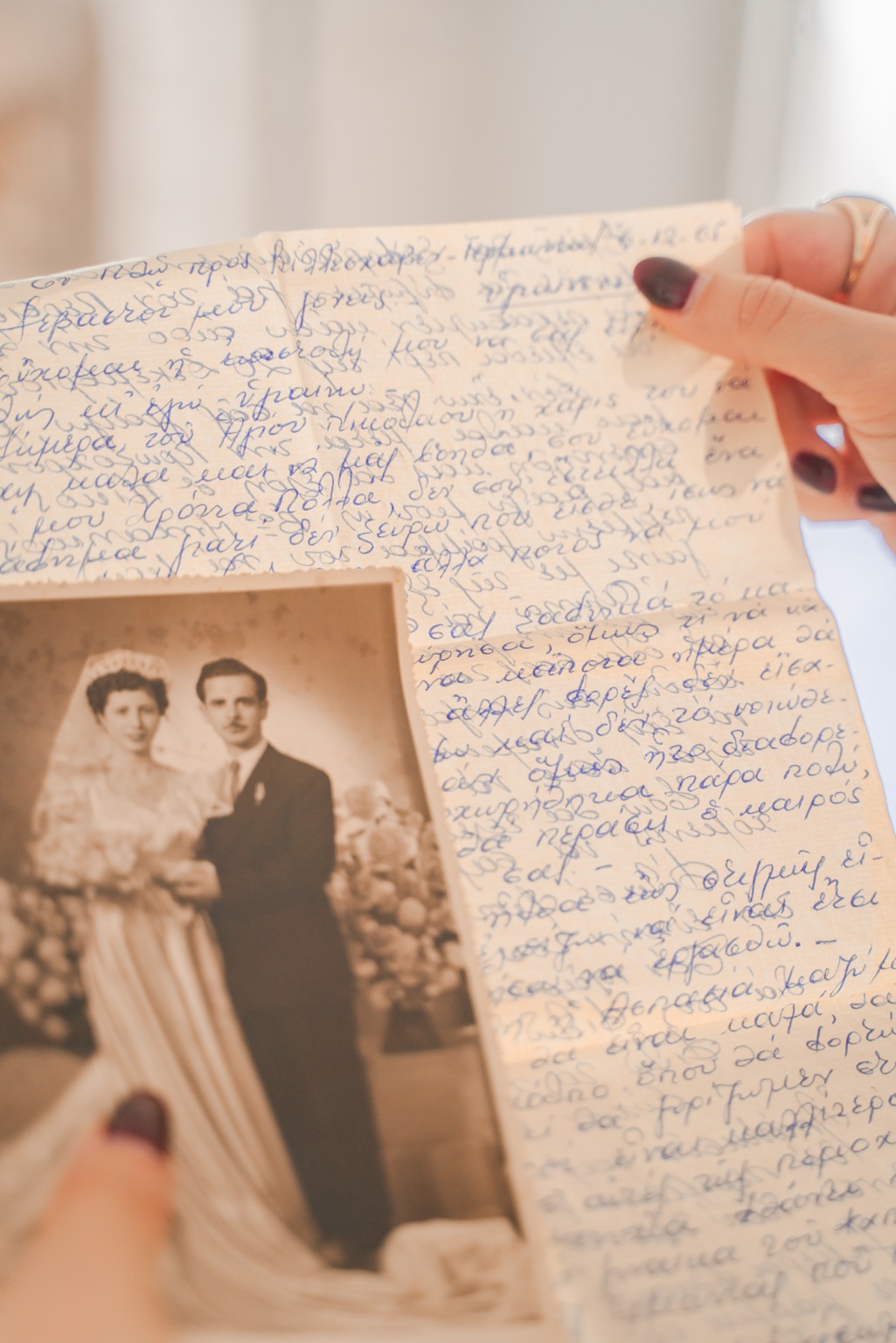
A son could sit somewhere far away and write to his mother knowing that the season might have changed before his words reached her.
News travelled slowly. Photographs travelled slowly. Money travelled slowly.
Even affection travelled slowly — and yet it arrived.
Perhaps that is what moves me most when I hold those letters now. The person writing had no idea exactly when his mother would sit down in this house and read his words — he only knew that eventually she would.
And she did.
She read the letter, folded it and put it away in a drawer.
Decades later, my mother and I opened that drawer — and the letters were waiting.
They are not the only things the house kept.
Many of my great-grandmother’s belongings are still in Houses 2, 3 and 4 today — chests, wardrobes and mirrors, old glassware, cooking pots and plates, a traditional coffee pot, an old scale with its weights, an oil lamp and other small things that once belonged to completely ordinary daily life.
I never wanted to throw them away or hide them somewhere for safekeeping. But I didn’t want to turn the houses into museums either.
The furniture that can still be used is used. In House 3, for example, the old wardrobe and chest are still doing precisely what they were made to do.
The smaller objects have found different roles. Some sit in cabinets, others in corners of the houses — no longer needed for their original purpose, perhaps, but still very much at home.
When I eventually worked on the houses myself, I discovered that these objects were not something I wanted to fit into a new design.
Quite the opposite — they became the starting point.
House 4 became blue because of an old blue oil lamp I found there. It is still one of the central pieces in the house.
I didn’t find a lamp to match the room — I made the room belong to the lamp.
House 2 happened in much the same way. An old green desk lamp, electric this time and from a later period, became the beginning of the greens that gradually found their way into the house.
There is something slightly absurd about calling these things “decorative objects.”
They were never decoration.
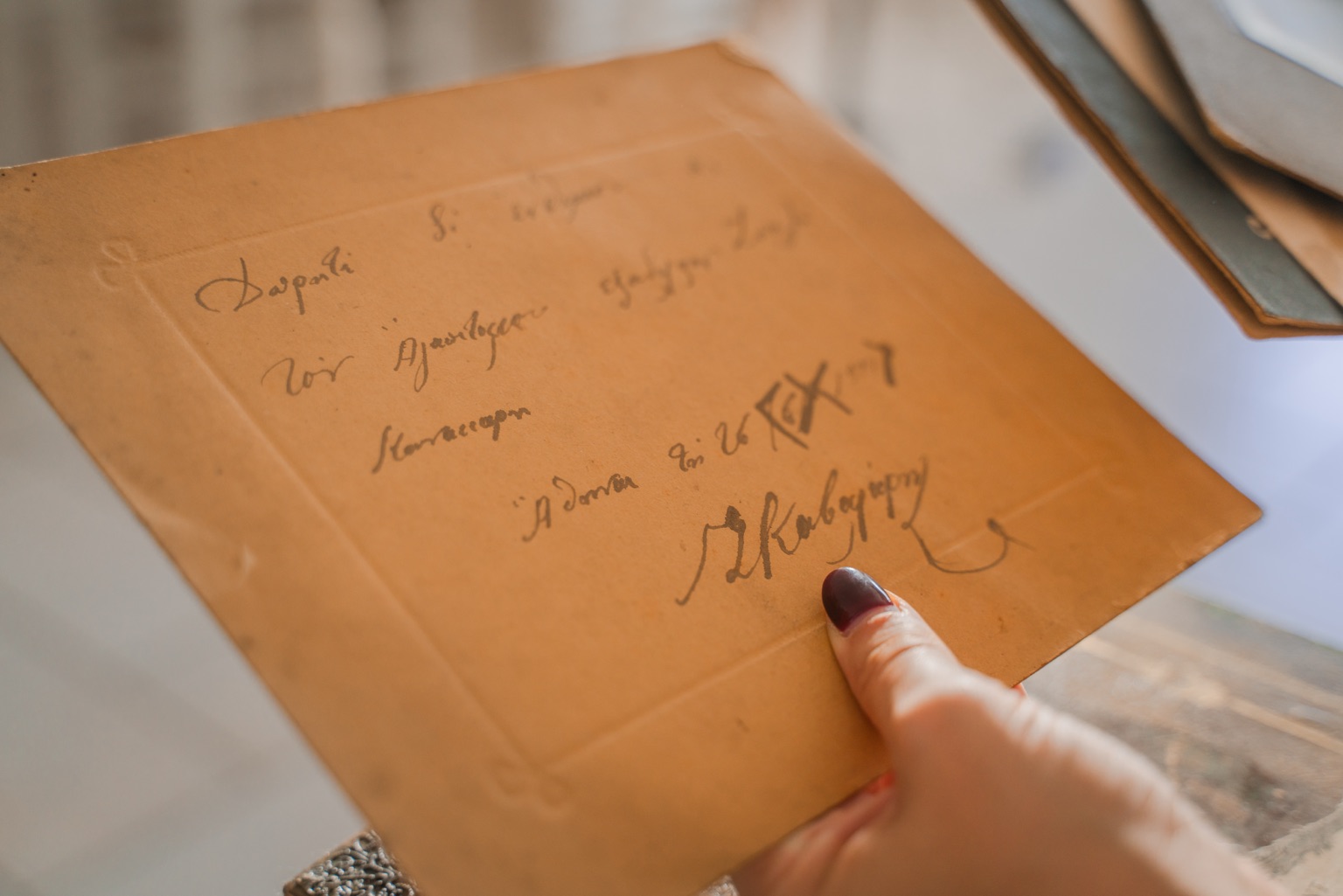
Someone used that pot, someone weighed something on those scales, someone lit that oil lamp because the room was dark — and someone opened that wardrobe every morning without the slightest suspicion that, generations later, a guest from the other side of the world might put their clothes inside it.
The objects did not acquire a story because I put them in the houses — they were the story already.
I simply built around them.
Perhaps that is what an old house remembers.
Not dates or renovations, and certainly not what a square metre of caldera property happens to be worth today.
It remembers life — who slept there, what was cooked, what was put away, who left and who wrote home.
What was used. What was kept.
A house cannot tell you any of this, of course. But sometimes it leaves enough behind for you to work it out — a wardrobe, an oil lamp, a photograph, a letter in a drawer.
And if you are very lucky, nobody threw them away.